
GALLERY Land Collective is a conduit for the representation of thoughtful explorations focused on landscape. We present the work of landscape architects and designers, ecologists, sociologists, anthropologists, artists, and others whose work informs the breadth of the discipline. It is a collective consciousness that raises landscape to the highest ideals. We invite your participation.
Call for Gallery Exhibition Proposals
GALLERY Land Collective is not a point of sale. We welcome those represented by other galleries, and should pieces be available for purchase, those transactions are undertaken by the individual or their contracted gallery, not GALLERY Land Collective. Our space is a thematic forum that offers a venue for display and discussion.
57 North Second Street, Philadelphia, Pennsylvania
Monday–Friday: 10am–5pm + “First” Fridays: 6–8pm
RUBIN TOOL COLLECTION
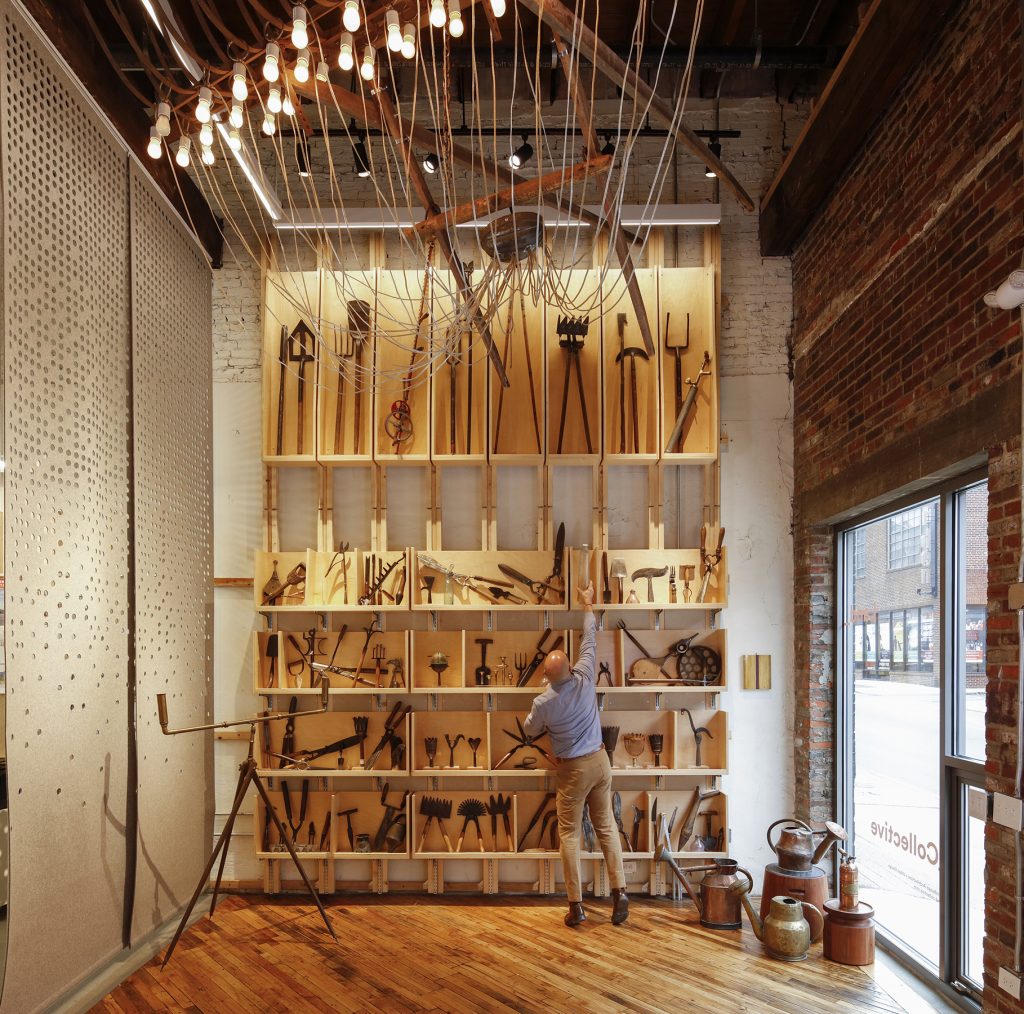
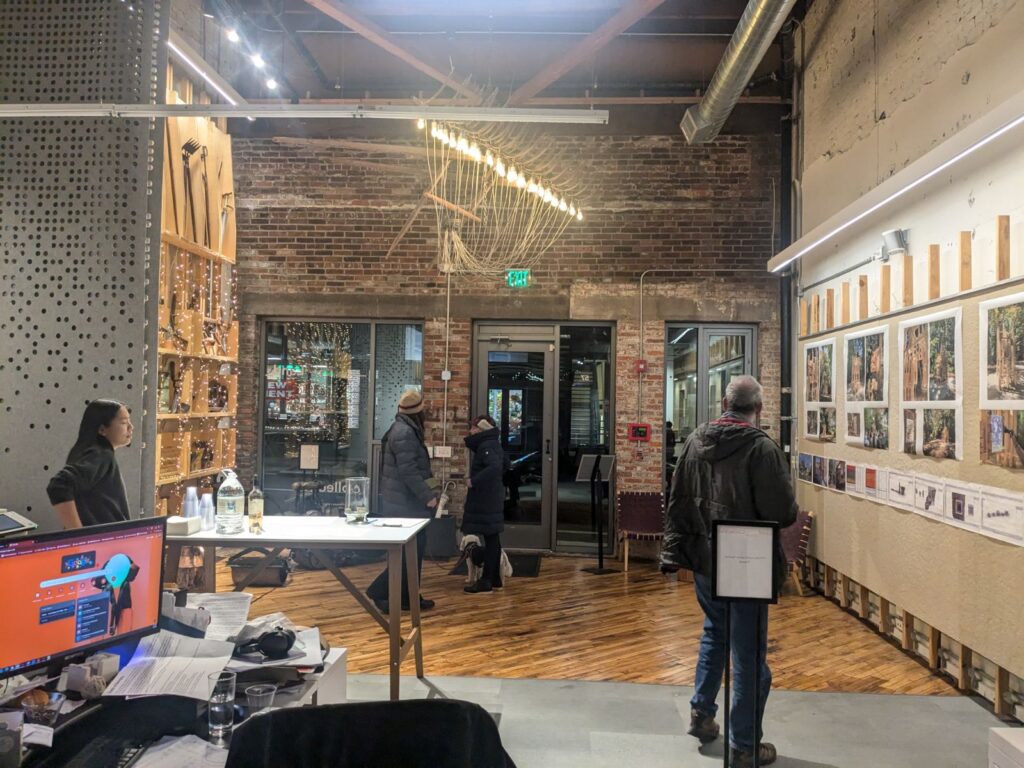
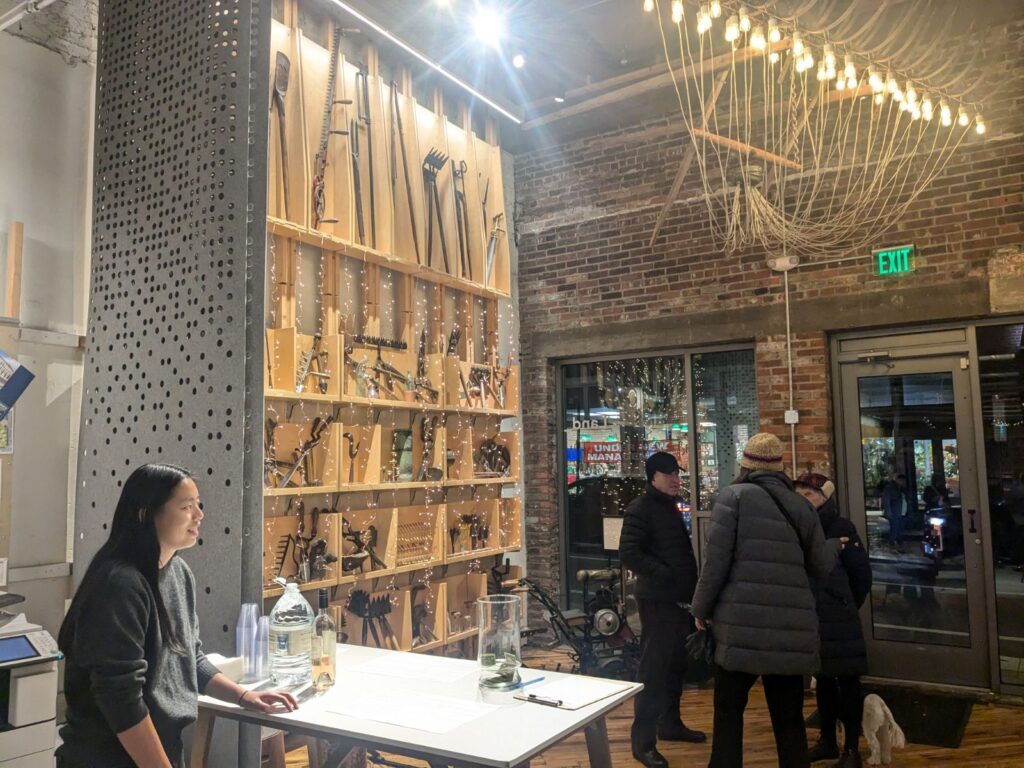
GALLERY Land Collective features a permanent, ever-changing installation of the antique landscape & garden tool collection of Land Collective’s Founding Principal, David A. Rubin. These more than 100 task-specific tools range in age from the late eighteenth to mid-twentieth centuries, and in origin from France and areas of Europe, the United Kingdom, and the United States. The collection represents the human past of “writing” the earth, and a long tradition of invention and ingenuity in elevating and manipulating nature to inform the human world. From the oils left behind on wooden handles by the hands of past gardeners to the blows of a blacksmith made visible in hammered metalwork, these tools connect us to the people that wielded them in an effort to render order in a complex natural world, to define culture, and to describe how landscape is physically written. Their inherent beauty and physicality are a presence that informs each day at Land Collective.
UPCOMING EXHIBITIONS
Weaving the Landscape by Julia Lines Wilson (December 2025)
Maria Schneider (February 2026)
PREVIOUS EXHIBITIONS
- Capability Pink Designs A Pleasure Garden With You by jeff joseph katz (June 2024 + June 2025)
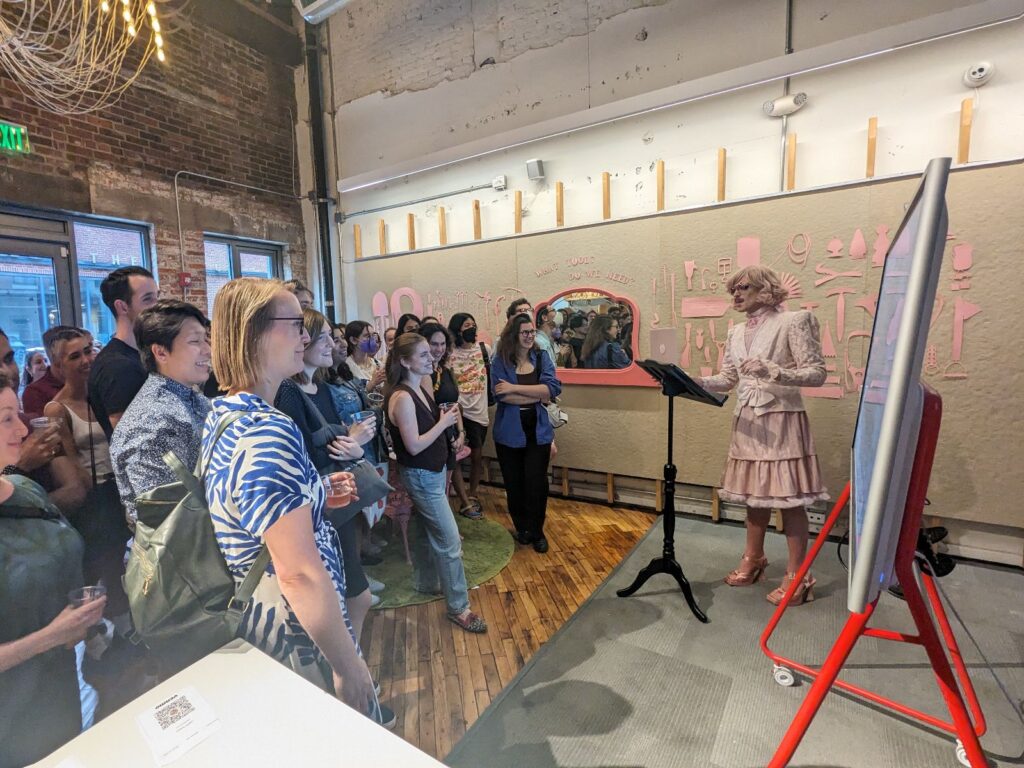
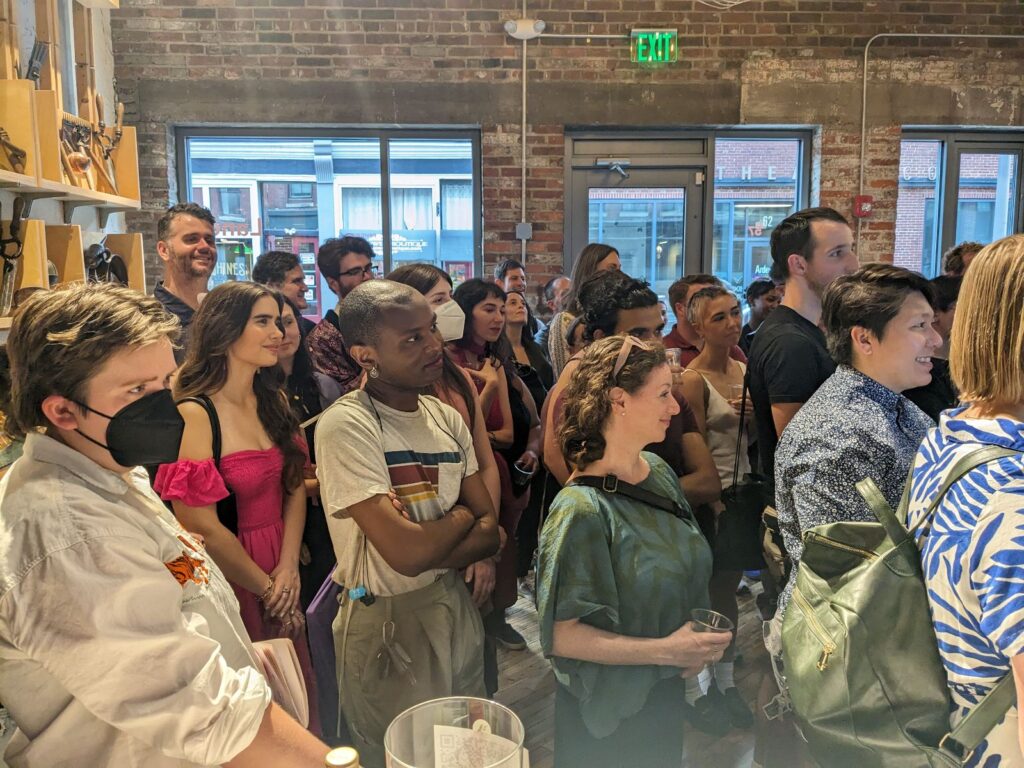
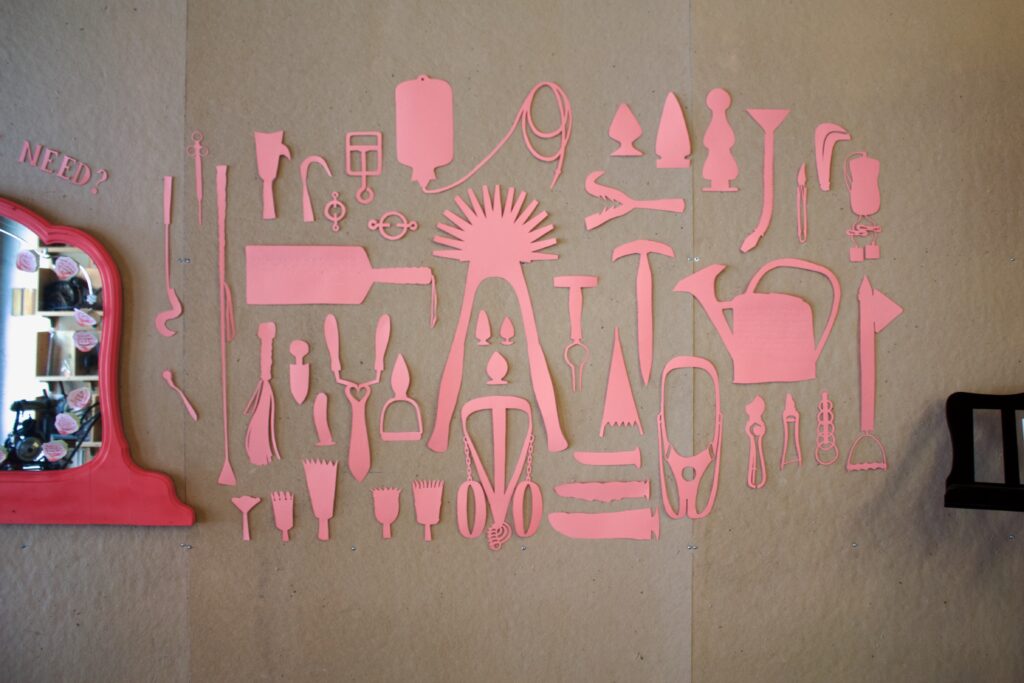
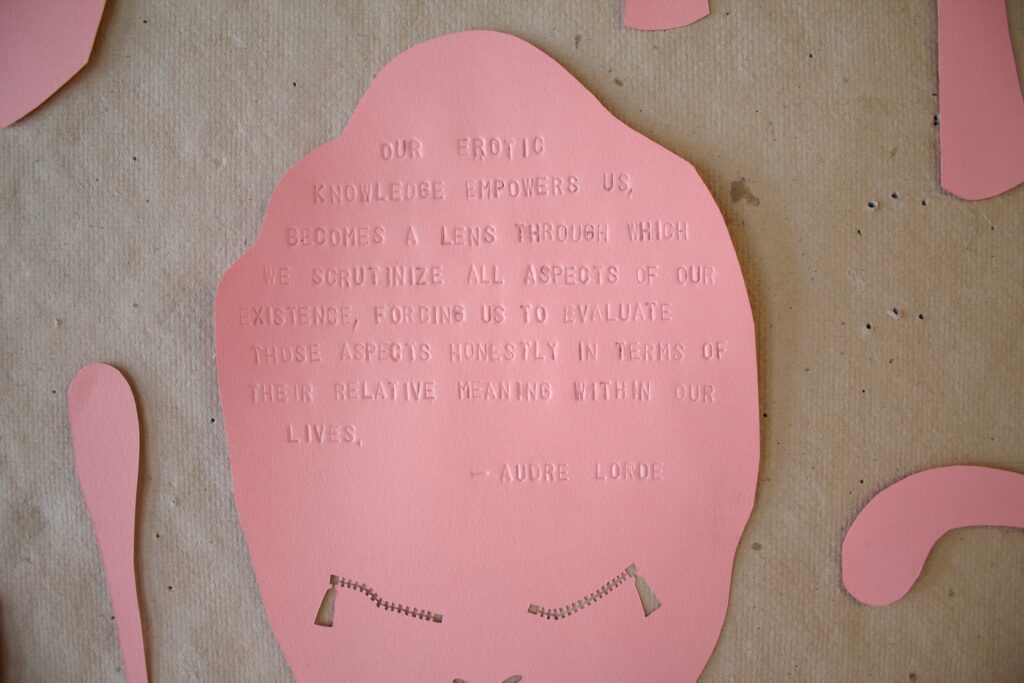
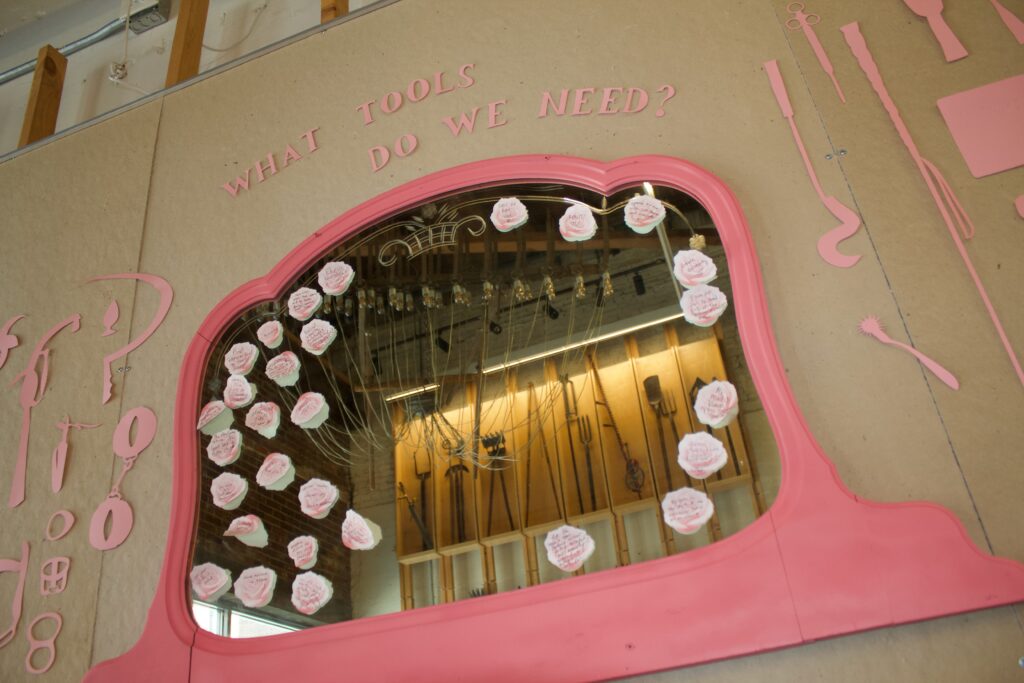
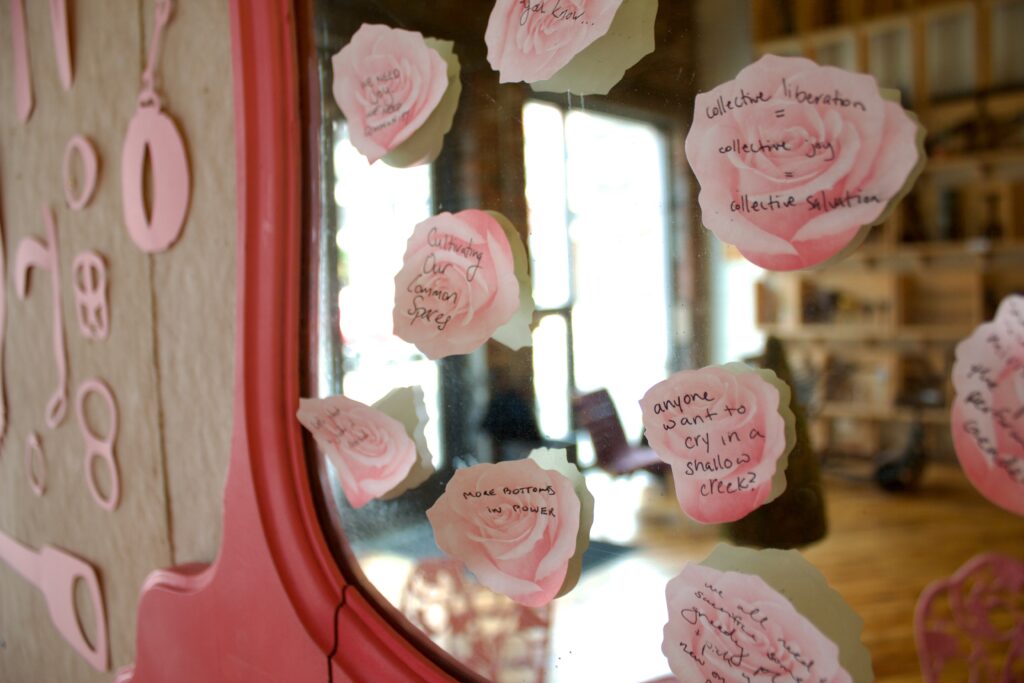
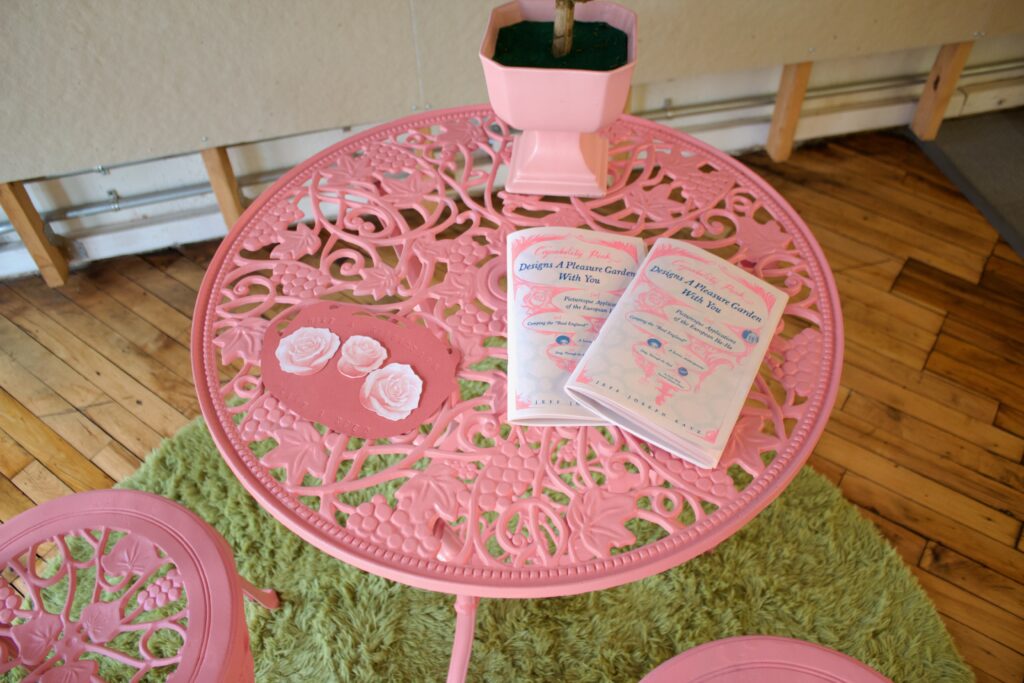
What exactly are “pleasure gardens,” and why can’t you have sex in them? What’s so campy about camping at Versailles? Is Mother Nature a dominatrix? Join drag queen & landscape “snarkitect” Capability Pink as she romps her way through the development of Europe’s upper-class gardens, discovering exactly what it has to do with Philadelphia and the current climate emergency. Come get lost in the hedge maze of history — and burn your way out.
- Shelter of Belonging by Joyce Hwang (December 2024)
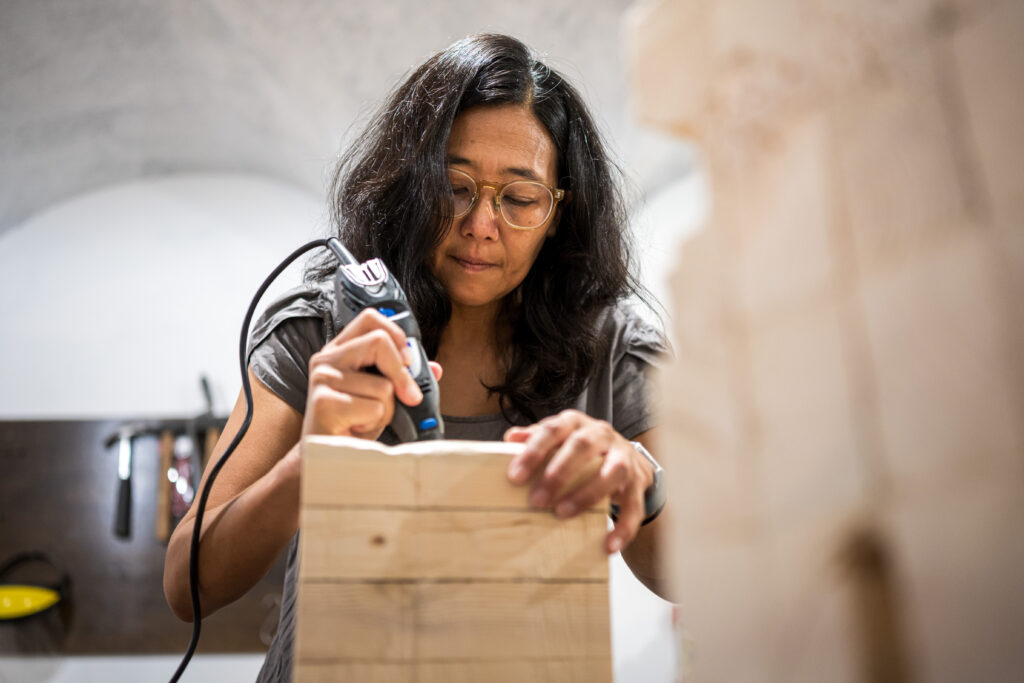
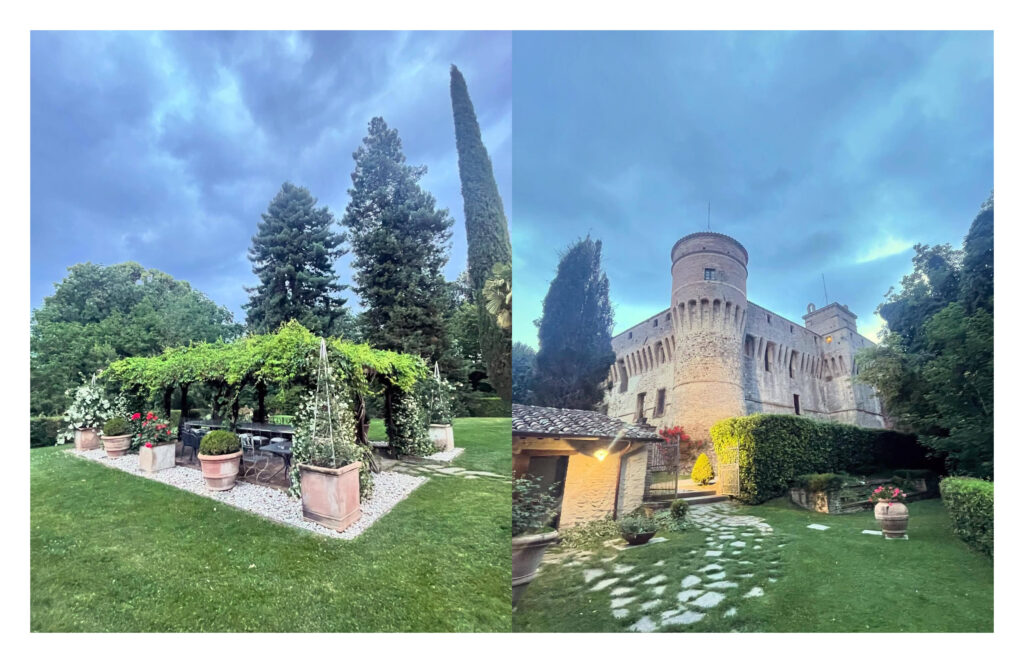
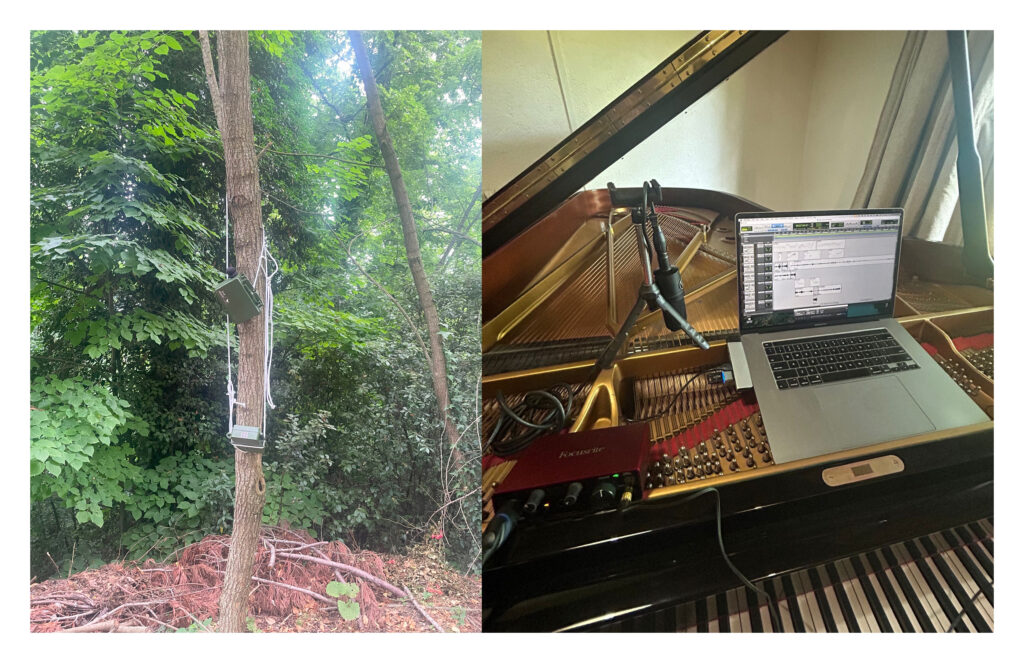
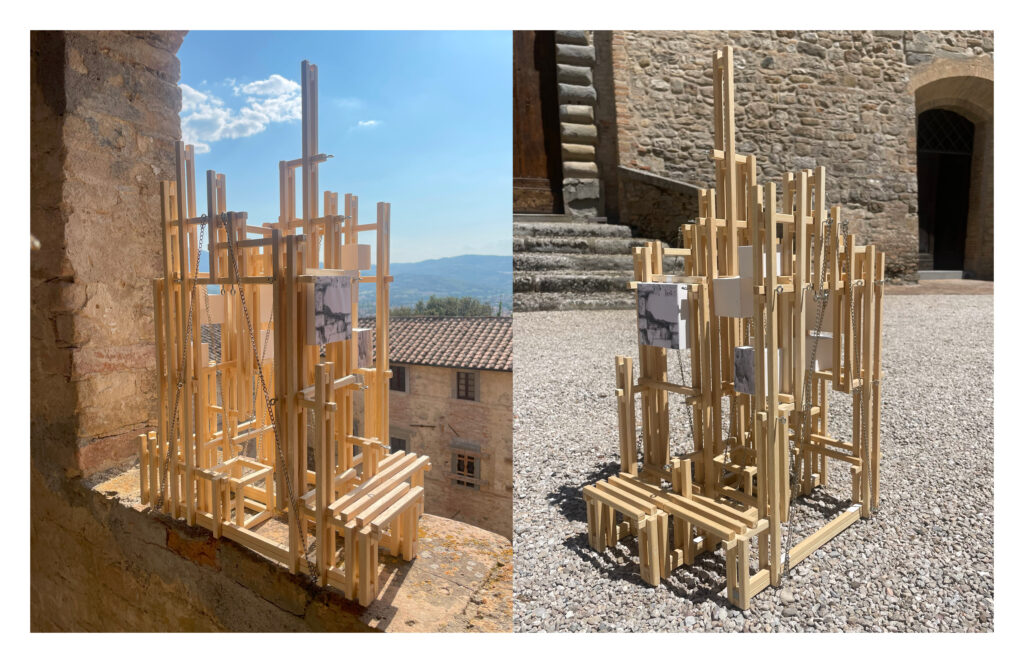
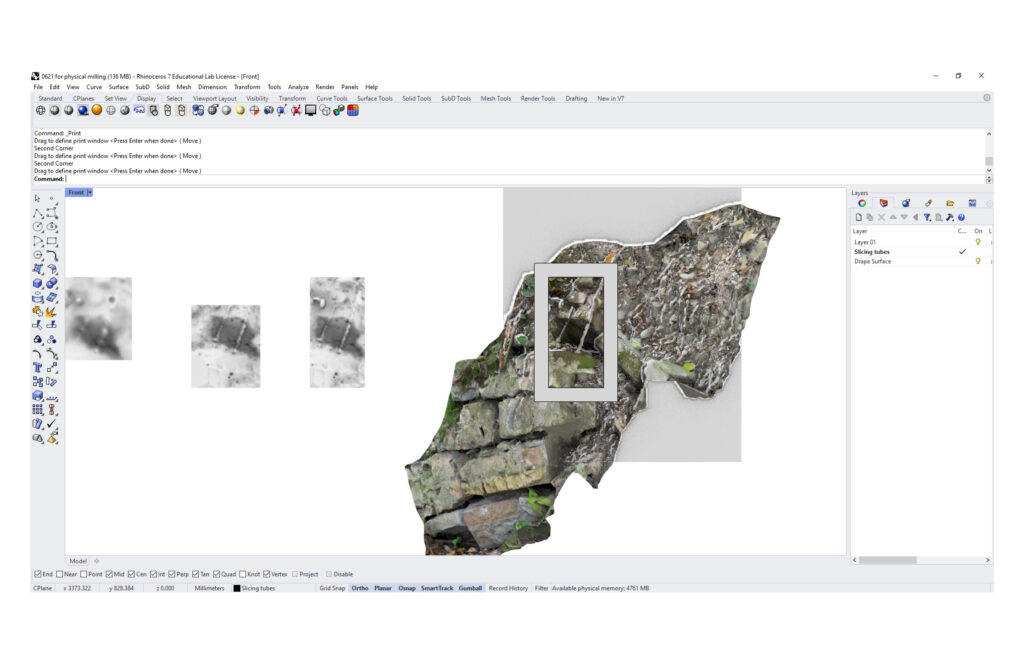

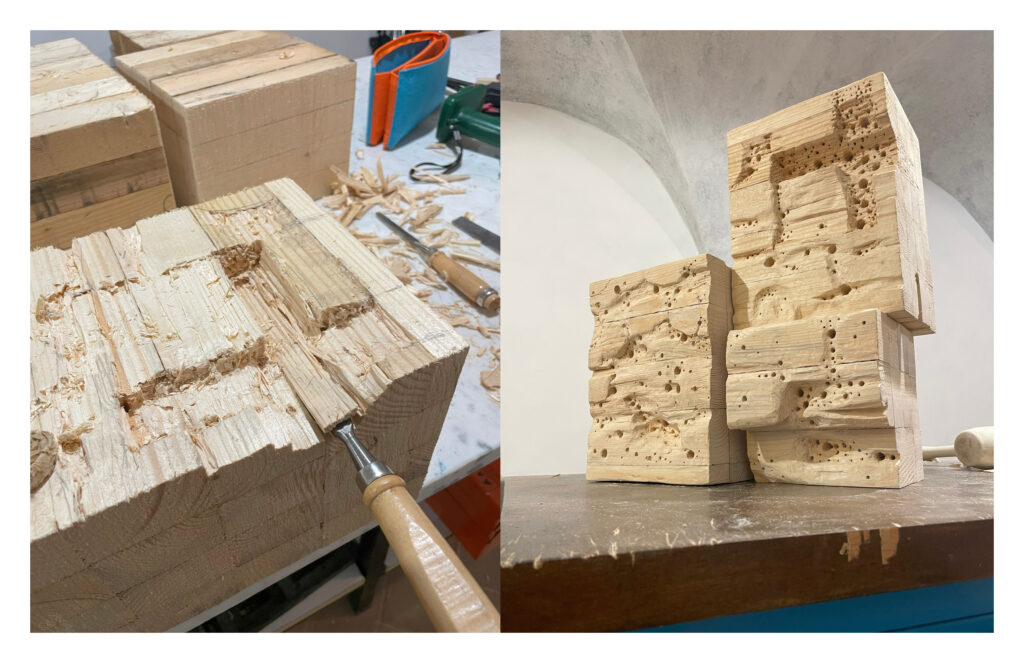
In 2024, Joyce Hwang was selected as the Civitella Ranieri/WOJR Architecture Prize Fellow, an award that included a six-week artist residency at a 15th century Italian castle and a commission to design and construct an architectural installation on site. The project shown here, Shelter of Belonging, is the installation that she created during her stay in Umbria, Italy. At the edge of Civitella’s forest, peeking into its manicured landscape, the Shelter of Belonging is a place of respite that welcomes both human and nonhuman inhabitants. The installation features a series of bespoke habitats for local fauna — including bats, birds, and solitary bees, as well as smaller terrestrial animals – with designs that are inspired by fragments of the castle and gardens, specifically alluding to spaces where wildlife dwell in close proximity to human life. In addition to supporting these habitats, the installation’s wooden-framed structures provide seats for residents to rest— just slightly outside of the designated social space of the gazebo and lawn chairs. Reflecting on seemingly oppositional terms – such as visitor/resident, shelter/home, and visible/hidden – this project is a meditation on multispecies environments and questions of belonging in our biodiverse world.
- Waylaid by Phillip Adams (October 2024)
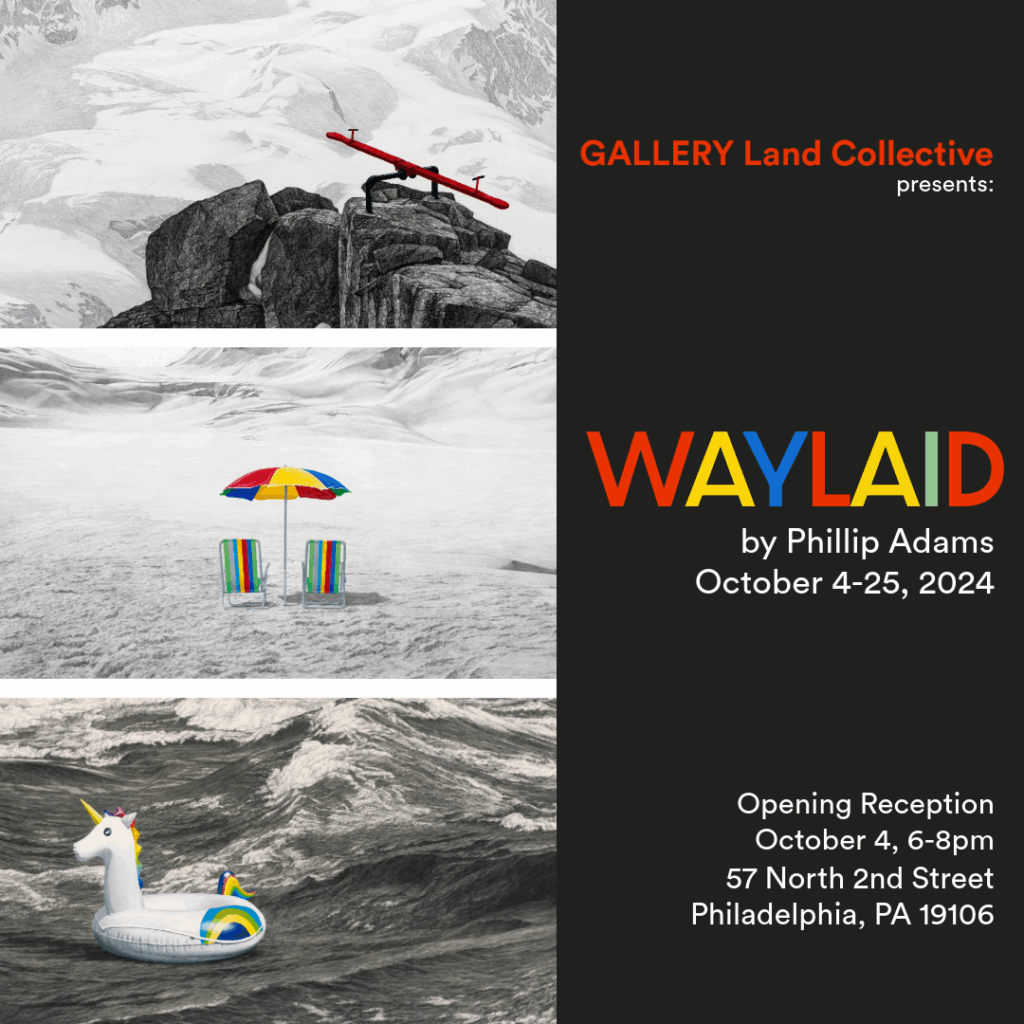
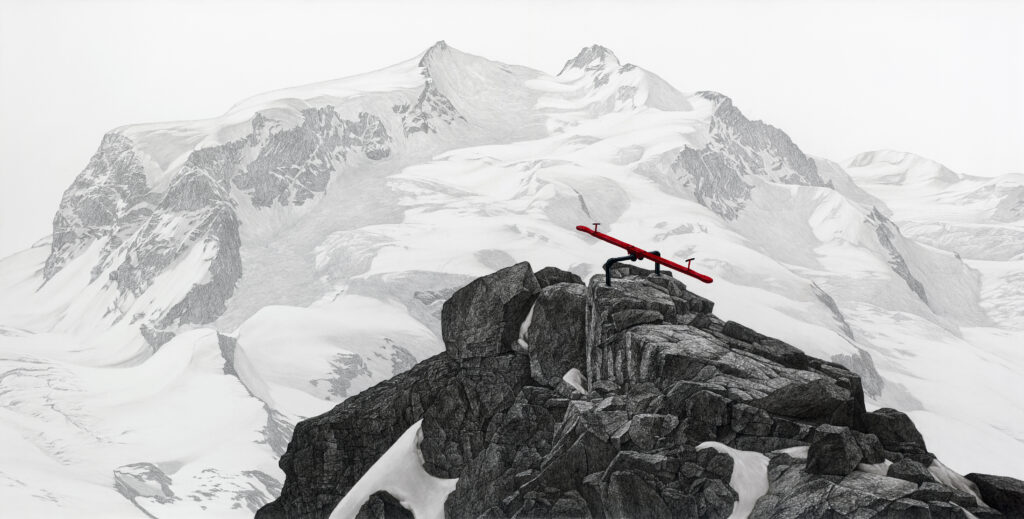

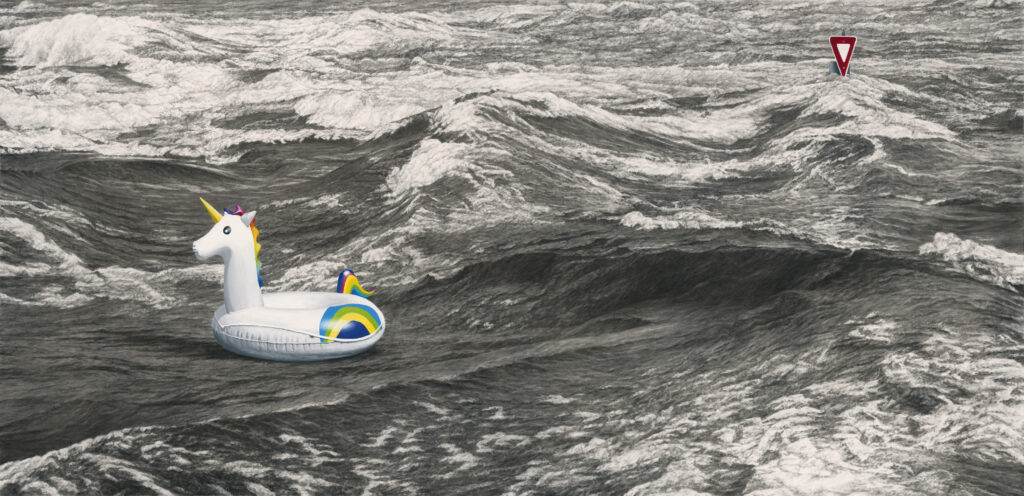
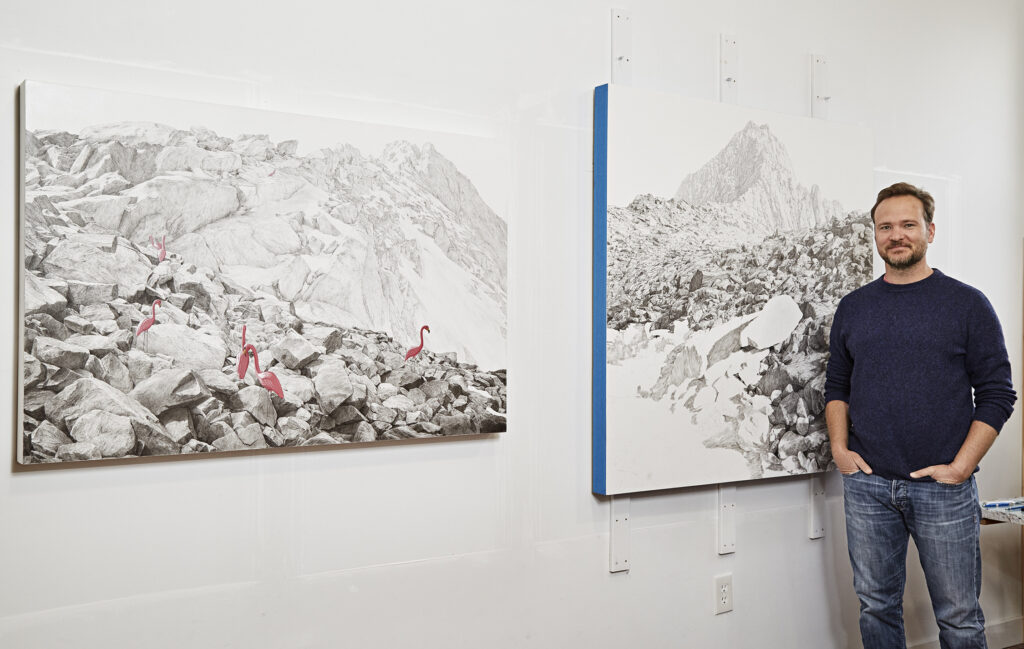
Phillip explores ideas related to nature and our impulses to control, reshape, and even destroy the landscapes and environments we play stewards of. Embedded in the work is a paradox of the desire to leave our mark while simultaneously seeking out the pristine, remote, and idyllic. With overtures to the climate crisis humanity faces, this work straddles the weight of rapidly changing environments with playful moments of seeming whimsy. While shrouded in a fragile balance between play and responsibility, these works are intended to inspire the complexity of emotions facing our way forward, as playful elements float, fly, or inhabit these landscapes, giving rise to feelings as varying as loss to wonder. This work is inspired in part by early theories of the Sublime. As the romantic grandeur of these landscapes and atmospheres evoke a sense of beauty and terror, they are recontextualized into moments of levity, playgrounds, or amusement parks. Phillip works from photographs he takes while personally exploring some of these vistas, whether it be in the mountains hiking and climbing, or kayaking rivers and lakes. He also collects source material that ranges from found images and postcards to photographs dating back to the late 1800s. He then constructs compositions that are based on real places. The materials used are primarily charcoal, graphite, and acrylic on wood panels. The use of charcoal and graphite links the materiality of carbon to the imagery, further connecting my work in an elemental and fragile way, while the plasticity of acrylic becomes a distinct voice. The work is created meticulously by building layers of small mark-making that reverberate the care, anxiety, and enormity he feels about the subject matter.
- PASTEL PAVEMENT by Kita Rich (August 2024)
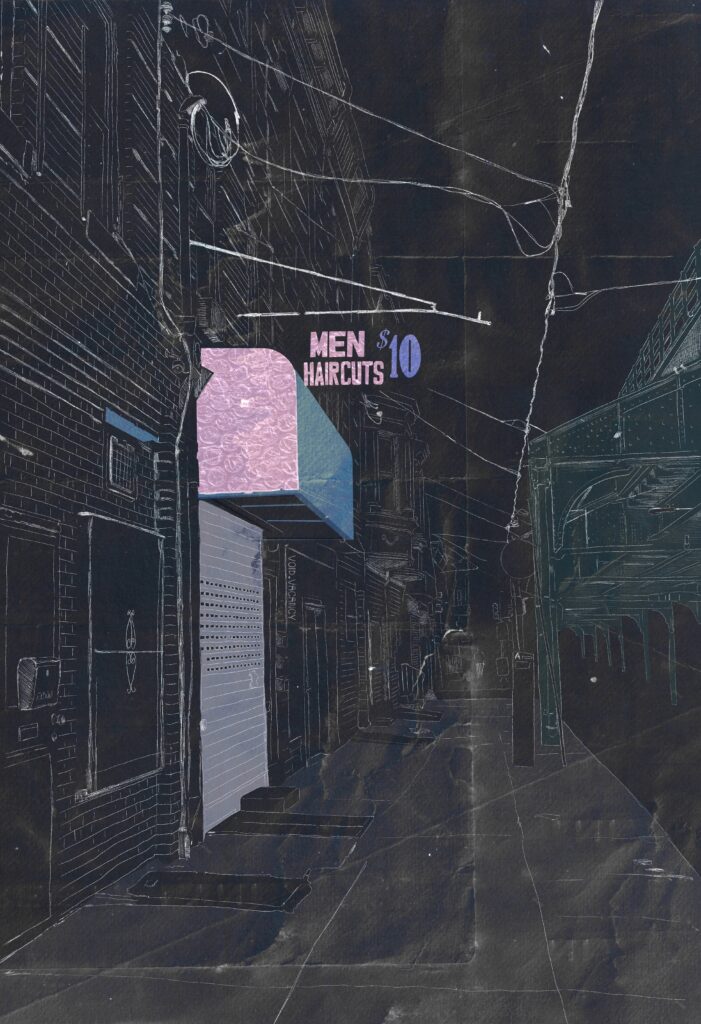

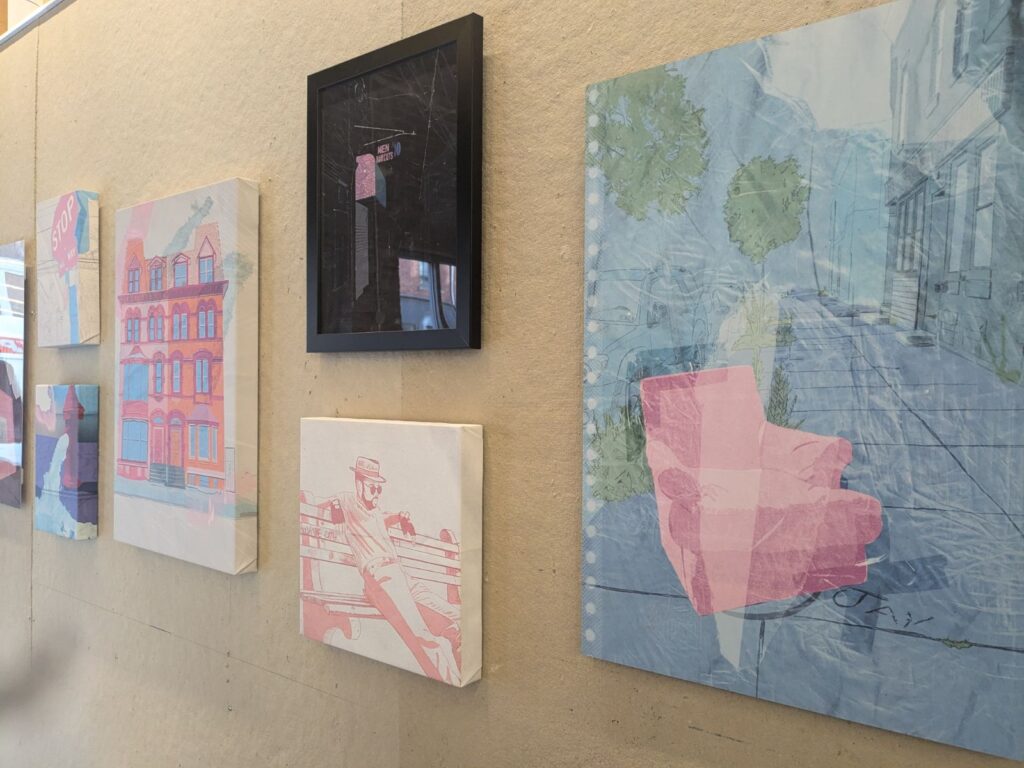
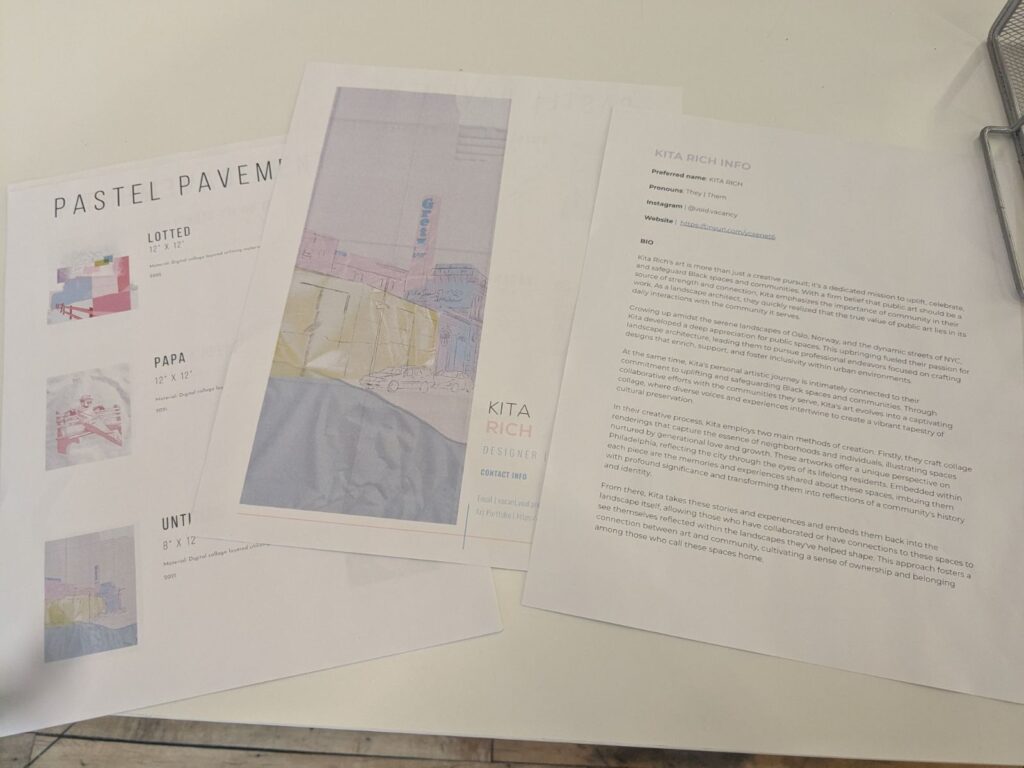

This exhibition documents the city as it is now, capturing its essence amidst rapid gentrification and constant development. The city transforms with every blink of an eye, and this is Kita Rich’s current perception of it through pastel tinted glasses. They hope everyone who views this exhibition finds some type of a connection, whether through a familiar location, the feeling of a neighborhood, comforting colors, or warm textures. Often when we think about landscape architecture we think of the physical landscape, however, there is so much more than just the physical. The city is a collage of people, materials, memories, and culture. This is embedded into the landscape. The goal of Kita’s art has always sought to capture this intricate mosaic.