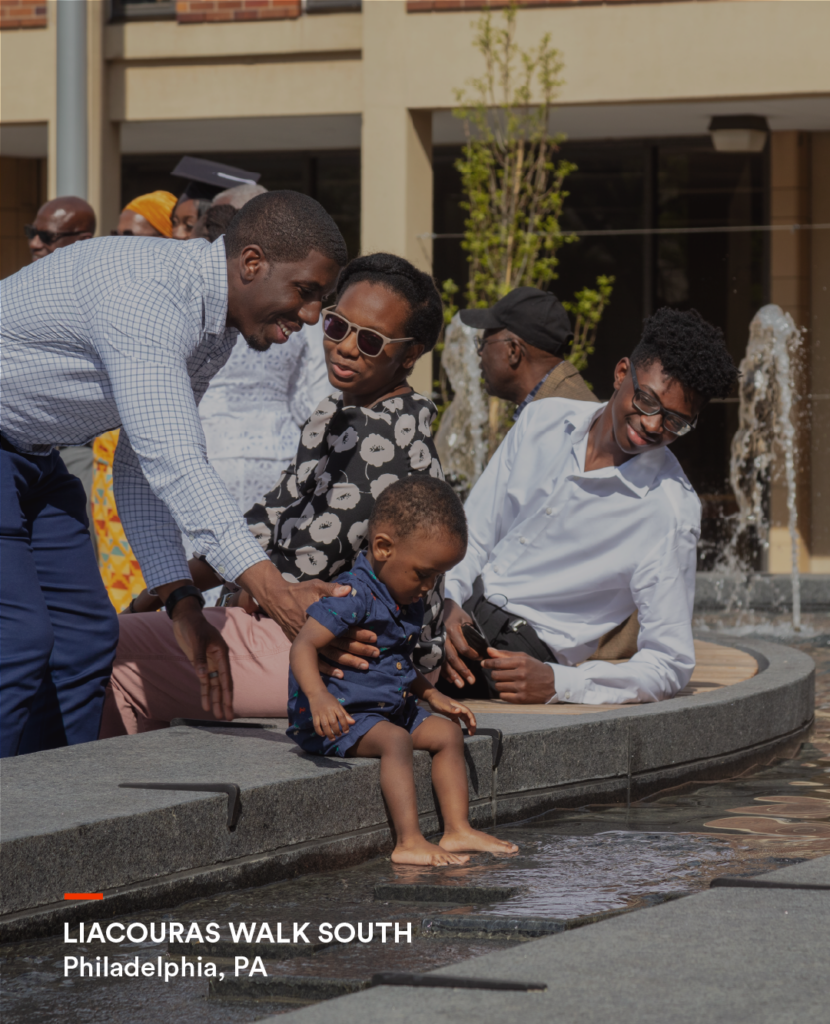
Collectivism 01: Empathy as a Design Tool
There is an ingrained image of the architect in our culture as a cape-wearing (think Frank Lloyd Wright), individualistic, intransigent, and uncompromising (think Howard Roark) hero who singlehandedly imagines and creates – from whole cloth – a visionary design that changes the world.
The image has always been wrong for the ways that it denies the collective and collaborative reality of building highly complex projects – whether buildings, interiors, or landscapes. But in this cultural moment, that posture now feels not just insufficient, but perhaps even dangerous.
The current moment, and the work we do today, ask for something different: attentiveness to the connective tissue between people, rather than the boundaries that divide them. As a landscape architect, I no longer see my role as standing ahead of my clients, leading them out of the metaphorical wilderness, but, rather, as standing alongside them. When their challenges become shared challenges, the work opens up. The “truth” no longer belongs to me alone, but emerges collectively.
I didn’t set out to build a practice around empathy. Early on, I assumed the most important parts of my work as a landscape architect would be technical – drawings, materials, systems. But the work kept pulling me back towards people: how they move through space, what makes them feel comfortable, and what pushes them away. Over time, I began to see that the choices people make in a space are rarely neutral, but shaped by design, whether we intend it or not.
Practicing empathy has also required a kind of vulnerability I didn’t expect. To genuinely problem-solve on behalf of others means allowing myself to be affected by their circumstances. That willingness has reshaped how I think about success. In an empathy-driven process, success isn’t measured by authorship or ambition, but by whether a problem has been meaningfully addressed and whether people feel heard. I’ve learned trust isn’t built strategically, but grows out of care and attention, through active listening. When clients feel understood, relationships tend to endure.
Often, clients aren’t fully aware of the range of experiences shaping the communities they serve. Early in a collaboration, we talk through the systems that inform landscape architecture, whether ecological, social, or cultural. But just as important is naming the diversity of people who move through landscapes: differences in age, ability, ethnicity, and economic circumstance. Bringing those perspectives into the conversation isn’t always comfortable, but it is necessary if a finished project is going to feel genuinely shared, loved in the hearts and the minds of those occupying that landscape.
Landscapes are full of signals – fences, paths, lighting, plantings – that carry cultural meaning whether we intend them to or not. Approaching these choices through a narrow lens risks reinforcing exclusion, but approaching them with empathy creates space for more people to see themselves reflected in the work.
When empathy is embedded in landscape design, spaces begin to feel different: more welcoming, easier to enter and linger in. They invite return visits, chance encounters, and small moments of connection. They become places where differences soften and ideas can take root. In that sense, empathy helps fulfill what public space has always promised: a true common ground.
This process serves to recognize we are more alike than different, differentiated by minute particles of DNA and cultural nuance. And in an era of nationalism and xenophobia, humanist landscapes that create opportunities for serendipitous encounters and engaging conversations will foster greater understanding and appreciation for our common humanness.
‘Collectivisms’ is a new series featuring essays by Founding Principal David A. Rubin.