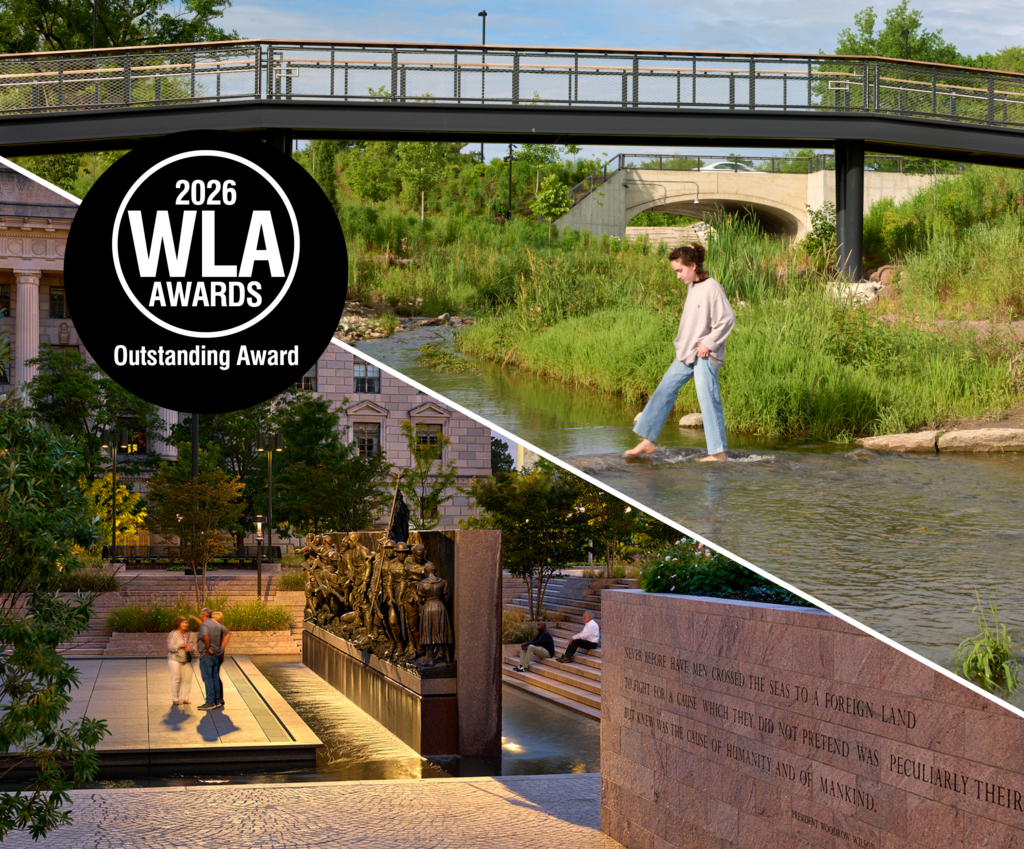
Land Collective Won Two World Landscape Architecture Awards!
Land Collective is honored to receive two World Landscape Architecture Awards!
World War I Memorial and Pershing Park has won the World Landscape Architect: Cultural Landscape Design Award, we are so grateful to the WLA and The Cultural Landscape Foundation for this incredible recognition!
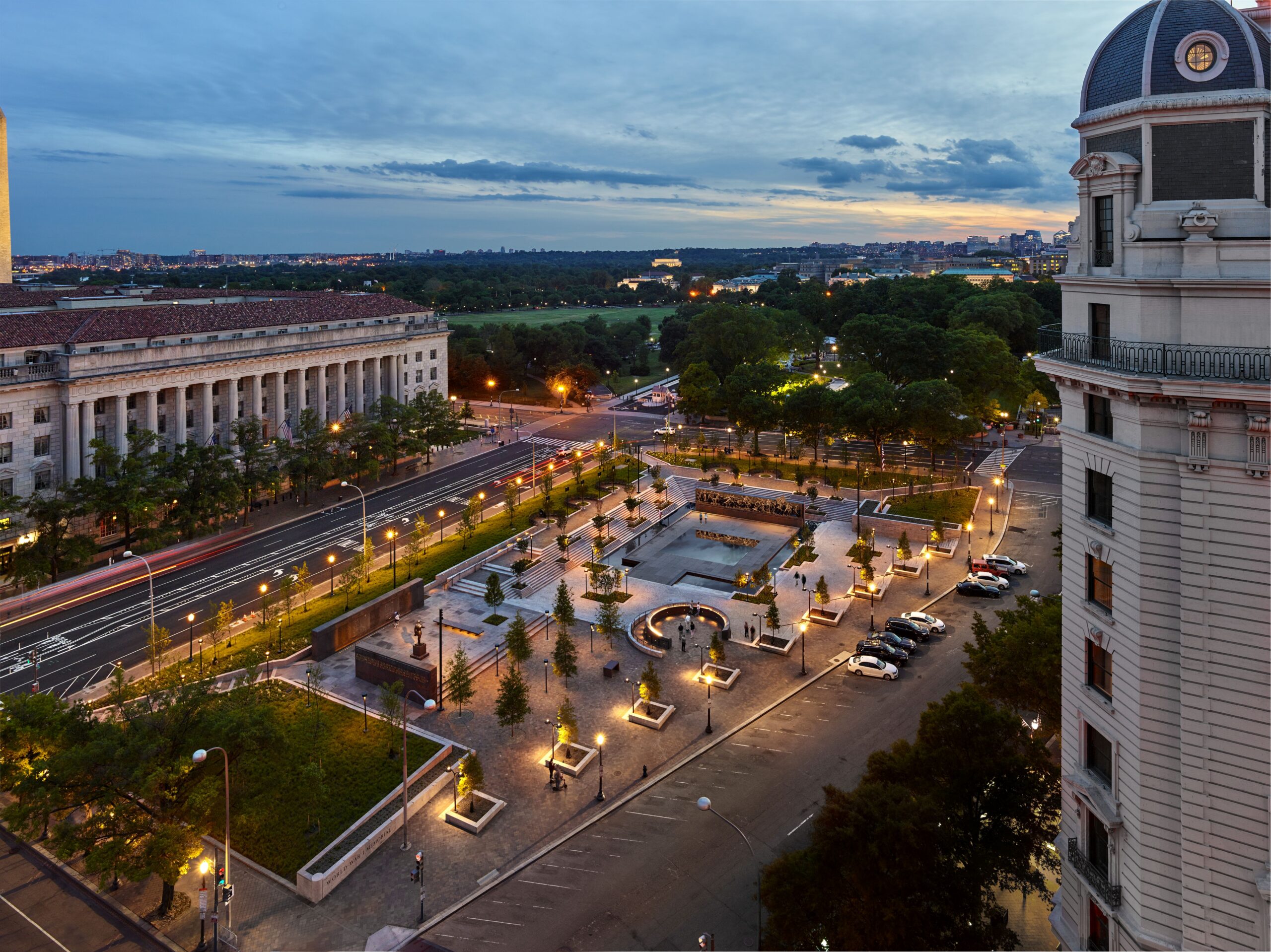
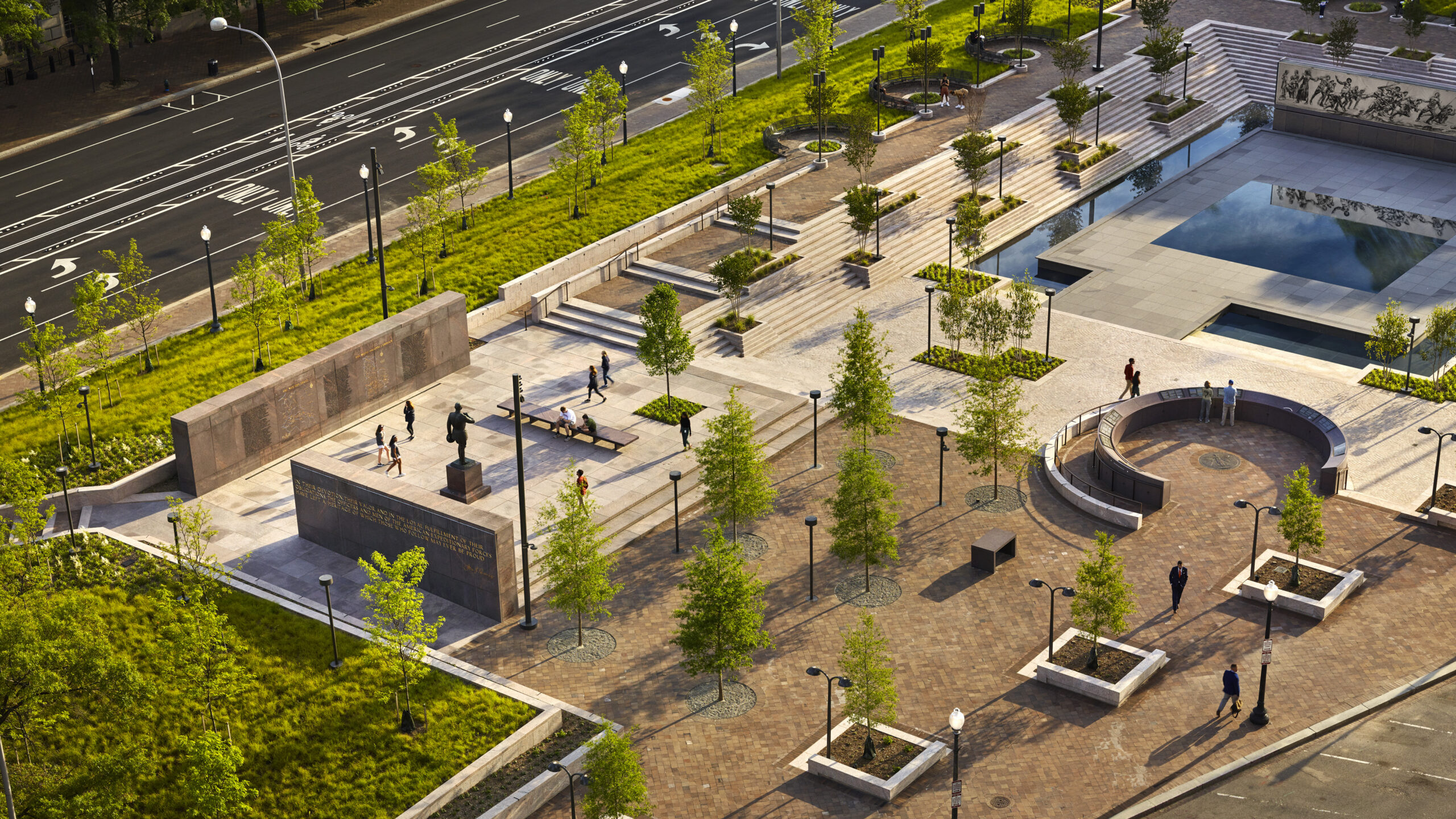
The National World War I Memorial demonstrates how a historic cultural landscape can be adapted to serve evolving public memory while preserving the qualities that give it meaning and significance. Integrated within Pershing Park, the project honors both the legacy of World War I and the park’s importance as a modernist landscape. The resulting landscape reflects stewardship as much as design. The sunken plaza and other defining spatial elements have been retained, preserving the sense of enclosure central to Friedberg’s vision. The former fountain basin has been reimagined as the setting for “A Soldier’s Journey,” a sculptural frieze that introduces narratives of service and sacrifice. This transformation maintains the experiential essence of the original park design while overlaying commemorative narratives.
In contrast to approaches that either erase or freeze historic places, the memorial offers a model of thoughtful managed change. It preserves the character of a modernist landmark while introducing a new national purpose. In doing so, it strengthens collective memory, supports civic life, and ensures the site remains active, relevant, and enduring.
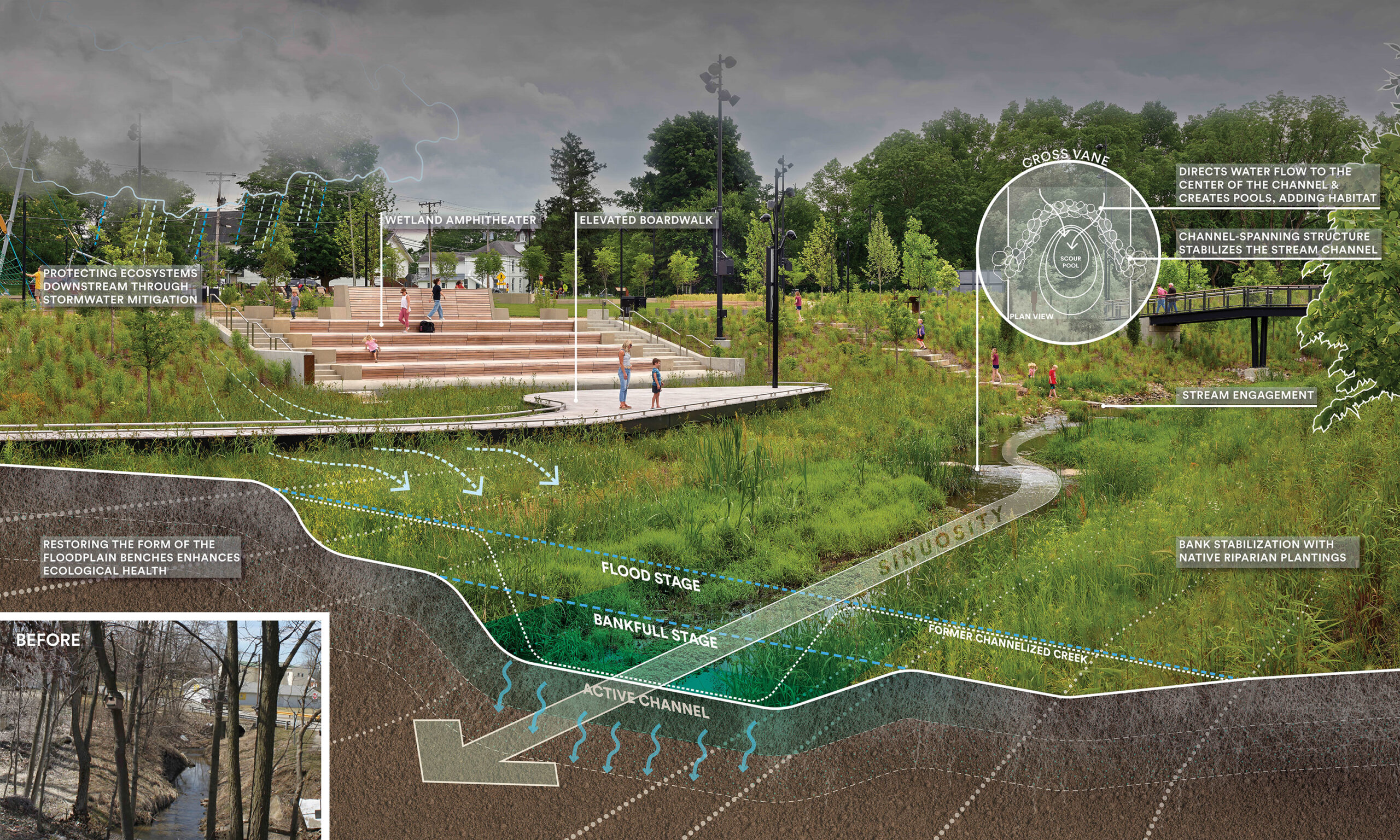
Grand Junction Park and Plaza has won an Outstanding Award in the Sustainability & Resilience – Built Category!
Grand Junction Park and Plaza transforms a severely degraded urban stream corridor into a resilient ecological system and defining civic landscape in Westfield. Once characterized by erosion, instability, and neglect, the corridor has been restored to enhance ecological health while anchoring a vibrant public realm, reestablishing both environmental function and community identity. At its center, the project redefines the stream as a dynamic, self-sustaining system, a symbol for Westfields’s commitment to its people: a place of care, support, and home. The channel was re-meandered to restore the natural hydrology. The corridor was widened to increase capacity for future storm events. In-stream structures, including riffles, pools, J-hooks, and cross vanes, dissipate energy and create diverse aquatic habitats, supporting long-term ecological resilience. Equally critical is the integration of empathy and human connection within this restored system. ADA-accessible paths, boardwalks, and stepped entries invite interaction with the water, while overlooks, bridges and a confluence terrace frame seasonal and hydrologic change. A wetland amphitheater is carefully embedded within the riparian corridor, enabling gathering and performance while reinforcing the visibility and legibility of ecological processes.
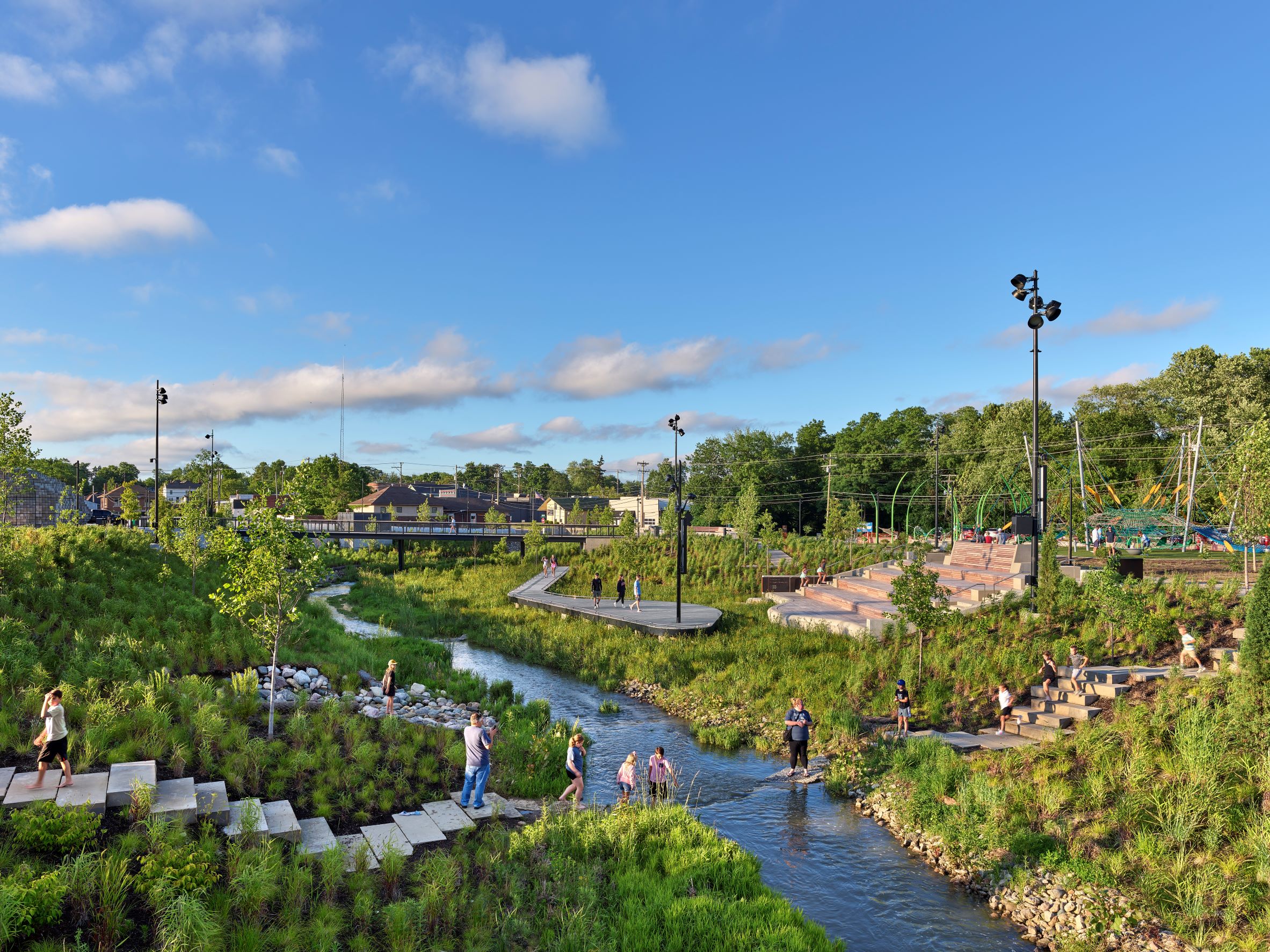
What was once a failing drainage corridor is now a performative, adaptive landscape that supports ecological health, fosters civic life, and advances climate resilience. It offers a replicable model for how cities can align restoration and placemaking to create enduring public infrastructure. Junctions bring people together. More than a passthrough, they are destinations, a place of rest, of introductions, meetings, and reunions. This is the center of our mission at Grand Junction Park and Plaza.
All image credits to Alan Karchmer.